All Primary Antibodies
Primary antibodies, immunoglobulins that bind to specific proteins or other biomolecules, are used in many research applications and protocols to detect targets of interest. They are developed using different animal hosts, including mouse, rat, rabbit, goat, sheep, and many others.
Monoclonal and Polyclonal Antibodies
One type of primary antibodies, monoclonal antibodies, provides high reproducibility and low cross-reactivity and background noise. Another type, polyclonal antibodies, often costs less and provides greater affinity and quicker binding. Both are produced using plasma B cells, but the former uses the same clone and the latter uses different clones. Monoclonal antibodies require hybridoma cell lines, and polyclonal antibodies do not.
There are also recombinant monoclonal antibodies with similar benefits, like high affinity, scalability, and specificity. They are produced using in vitro cloning of plasma B cells and expression hosts.
Conjugated Primary Antibodies
Antibodies can be labeled with various fluorophores or detection agents or used without labels. Labeled primary antibodies, also known as conjugated primary antibodies, help researchers simplify and streamline their applications. They are coupled with common enzymes and dyes such as Alexa Fluor and often used in protein and cell analysis.
Applications
Antibodies for life sciences applications are used in flow cytometry, western blotting, ELISA, immunohistochemistry, and immunocytochemistry. Secondary antibodies can be added to support the detection and purification of certain antigens. They bind to the primary antibody, which binds to the antigen of interest. Finding the right combination of antibodies can result in greater antigen specificity and a strong, detectable signal.
- (49)
- (3)
- (201)
- (112)
- (493)
- (9)
- (32)
- (1)
- (86)
- (190)
- (24)
- (5)
- (123)
- (13)
- (8)
- (1)
- (2)
- (1)
- (1)
- (305)
- (18)
- (12)
- (18)
- (17)
- (17)
- (18)
- (19)
- (17)
- (18)
- (19)
- (21)
- (2)
- (1)
- (1)
- (1)
- (15)
- (19)
- (21)
- (22)
- (21)
- (22)
- (20)
- (20)
- (20)
- (19)
- (2)
- (18)
- (12)
- (20)
- (9)
- (9)
- (19)
- (12)
- (12)
- (13)
- (13)
- (13)
- (15)
- (2)
- (6)
- (101)
- (14)
- (13)
- (12)
- (1)
- (5)
- (2)
- (476)
- (10)
- (1)
- (48)
- (2)
- (1)
- (1)
- (8)
- (92)
- (11)
- (2)
- (2)
- (2)
- (1)
- (2)
- (1)
- (14)
- (10)
- (2)
- (1)
- (11)
- (1)
- (6)
- (608)
- (103)
- (3)
- (13)
- (3)
- (12)
- (12)
- (3)
- (1)
- (3)
- (3)
- (420)
- (2)
- (306)
- (3)
- (15)
- (5)
- (10)
- (20)
- (1)
- (1)
- (1)
Filtered Search Results
Invitrogen™ DC-SIGN Monoclonal Antibody (728804)
Greener Choice Product
This product offers one or more environmental benefits itemized in the U.S. FTC Green Guides.
Learn More About the Greener Choice Program
This product offers one or more environmental benefits itemized in the U.S. FTC Green Guides.
Learn More About the Greener Choice Program
Rat Monoclonal Antibody
Invitrogen™ SIGN-R4 Monoclonal Antibody (210006)
Greener Choice Product
This product offers one or more environmental benefits itemized in the U.S. FTC Green Guides.
Learn More About the Greener Choice Program
This product offers one or more environmental benefits itemized in the U.S. FTC Green Guides.
Learn More About the Greener Choice Program
Rat Monoclonal Antibody
DC-SIGN/CD209 Antibody (INSERM patent anti-DC-SIGN) - Humanized, Novus Biologicals™
Human Monoclonal Antibody
| Content And Storage | Store at -20°C in powder form. Store at -80°C once reconstituted. |
|---|---|
| Target Species | Human |
| Host Species | Human |
| Conjugate | Unconjugated |
| Applications | Flow Cytometry,ELISA,Functional Assay |
| Form | Purified |
| Isotype | IgG1 |
| Gene Accession No. | Q9NNX6 |
| Research Discipline | Adaptive Immunity, Immunology, Virology Bacteria and Parasites |
| Antigen | DC-SIGN/CD209 |
| Regulatory Status | RUO |
| Purification Method | Protein A purified |
| Gene Alias | CD209 antigendendritic cell-specific intracellular adhesion molecules (ICAM)-3 grabbingnon-integrin, CD209 molecule, CDSIGNHIV gpl20-binding protein, CLEC4LC-type lectin domain family 4 member L, DC-SIGN1C-type lectin domain family 4, member L, DC-SIGNMGC129965, Dendritic cell-specific ICAM-3-grabbing non-integrin 1 |
| Gene ID (Entrez) | 30835 |
| Formulation | Lyophilized from 25mM histidine, 8% sucrose, 0.01% Tween80 (pH6.2) |
| Immunogen | DC-SIGN/ CD209 |
| Classification | Monoclonal |
| Reconstitution | Reconstitute with sterile, distilled water to a final concentration of 1 mg/mL. Gently shake to solubilize completely. Do not vortex. |
| Primary or Secondary | Primary |
| Clone | INSERM patent anti-DC-SIGN |
| Content And Storage | Store at 4C short term. Aliquot and store at -20C long term. Avoid freeze-thaw cycles. |
|---|---|
| Target Species | Human,Mouse,Primate |
| Host Species | Rabbit |
| Conjugate | Unconjugated |
| Applications | Western Blot |
| Form | Purified |
| Isotype | IgG |
| Research Discipline | Adaptive Immunity, Immunology, Virology Bacteria and Parasites |
| Concentration | 0.5 mg/mL |
| Antigen | DC-SIGN/CD209 |
| Gene Symbols | CD209 |
| Regulatory Status | RUO |
| Purification Method | Protein A purified |
| Dilution | Western Blot 2-4ug/ml |
| Gene Alias | CD209 antigendendritic cell-specific intracellular adhesion molecules (ICAM)-3 grabbingnon-integrin, CD209 molecule, CDSIGNHIV gpl20-binding protein, CLEC4LC-type lectin domain family 4 member L, DC-SIGN1C-type lectin domain family 4, member L, DC-SIGNMGC129965, Dendritic cell-specific ICAM-3-grabbing non-integrin 1 |
| Gene ID (Entrez) | 30835 |
| Formulation | 0.2 ml PBS and 0.05% BSA with 0.05% Sodium Azide |
| Immunogen | A portion of amino acids 320-370 from human DC-SIGN (CD209) was used as the immunogen for this antibody. |
| Classification | Polyclonal |
| Primary or Secondary | Primary |
| Test Specificity | The amino acid sequence used as immunogen for this antibody is 100% homologous in human, ape, and orangutan, 94% in old World monkey, rhesus monkey, macaque, white-cheeked gibbon, and chimpanzee, 89% in rat, and 83% homologous in mouse. |
DC-SIGN/CD209 Antibody (INSERM patent anti-DC-SIGN), CoraFluor™ 1, Novus Biologicals™
Human Monoclonal Antibody
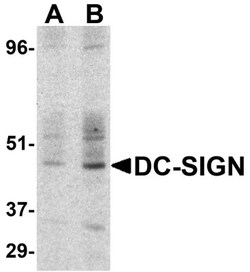
| Content And Storage | Store at 4°C short term. Aliquot and store at -20°C long term. Avoid freeze-thaw cycles. |
|---|---|
| Target Species | Human |
| Host Species | Rabbit |
| Conjugate | Unconjugated |
| Applications | Western Blot,ELISA,Immunohistochemistry,Immunocytochemistry,Immunofluorescence,Immunohistochemistry (Paraffin) |
| Isotype | IgG |
| Gene Accession No. | Q9NNX6 |
| Research Discipline | Adaptive Immunity, Immunology, Virology Bacteria and Parasites |
| Concentration | 1 mg/mL |
| Antigen | DC-SIGN/CD209 |
| Gene Symbols | CD209 |
| Regulatory Status | RUO |
| Purification Method | Affinity Purified |
| Dilution | Western Blot 1-2 μg/mL, ELISA 1:100-1:2000, Immunohistochemistry 10 μg/mL, Immunocytochemistry/Immunofluorescence 20 μg/mL, Immunohistochemistry-Paraffin 10 μg/mL |
| Molecular Weight of Antigen | 47 kDa |
| Gene Alias | CD209 antigendendritic cell-specific intracellular adhesion molecules (ICAM)-3 grabbingnon-integrin, CD209 molecule, CDSIGNHIV gpl20-binding protein, CLEC4LC-type lectin domain family 4 member L, DC-SIGN1C-type lectin domain family 4, member L, DC-SIGNMGC129965, Dendritic cell-specific ICAM-3-grabbing non-integrin 1 |
| Gene ID (Entrez) | 30835 |
| Formulation | PBS with 0.02% Sodium Azide |
| Immunogen | Antibody was raised against a synthetic peptide corresponding to 21 amino acids near the center of human DC-DIGN. The immunogen is located within the last 50 amino acids of DC-SIGN. Amino Acid Squence: CSRDEEQFLSPAPATPNPPPA |
| Classification | Polyclonal |
| Primary or Secondary | Primary |
| Content And Storage | Short term: Store at 2-4°C. Long term, aliquot and store at -20°C. |
|---|---|
| Host Species | Mouse |
| Conjugate | Unconjugated |
| Applications | Immunohistochemistry |
| Positive Control | THP-1 or HeLa Cells. Small Intestine, Uterus or Lymph Node. |
| Cellular Localization | Secreted and Cell Surface |
| Isotype | IgG2b κ |
| Gene Accession No. | NP_001138371 |
| Concentration | 200μg/mL |
| Antigen | CD209 / DC-SIGN |
| Gene Symbols | CD209 |
| Regulatory Status | RUO |
| Purification Method | Protein A/G Purified |
| Molecular Weight of Antigen | 45kDa |
| Gene ID (Entrez) | 30835 |
| Formulation | 10mM PBS with 0.05% BSA and 0.05% Azide |
| Immunogen | Recombinant human CD209 protein fragment |
| Classification | Monoclonal |
| Primary or Secondary | Primary |
| Clone | C209/1781 |
| Content And Storage | Store at 4C. |
|---|---|
| Target Species | Human |
| Host Species | Mouse |
| Conjugate | Unconjugated |
| Applications | Flow Cytometry,Immunocytochemistry,Immunofluorescence,Immunohistochemistry (Paraffin),SDS-Page |
| Form | Purified |
| Isotype | IgG2b κ |
| Research Discipline | Adaptive Immunity, Immunology, Virology Bacteria and Parasites |
| Concentration | 0.2 mg/mL |
| Antigen | DC-SIGN/CD209 |
| Gene Symbols | CD209 |
| Regulatory Status | RUO |
| Purification Method | Protein A or G purified |
| Dilution | Flow Cytometry 0.5 - 1 ug/million cells, Immunocytochemistry/Immunofluorescence 1 - 2 ug/ml, Immunohistochemistry-Paraffin 0.5 - 1.0 ug/ml, SDS-Page |
| Molecular Weight of Antigen | 45 kDa |
| Gene Alias | CD209 antigendendritic cell-specific intracellular adhesion molecules (ICAM)-3 grabbingnon-integrin, CD209 molecule, CDSIGNHIV gpl20-binding protein, CLEC4LC-type lectin domain family 4 member L, DC-SIGN1C-type lectin domain family 4, member L, DC-SIGNMGC129965, Dendritic cell-specific ICAM-3-grabbing non-integrin 1 |
| Gene ID (Entrez) | 30835 |
| Formulation | 10mM PBS with 0.05% BSA with 0.05% Sodium Azide |
| Immunogen | Recombinant human CD209 protein fragment |
| Classification | Monoclonal |
| Primary or Secondary | Primary |
| Clone | C209/1781 |
DC-SIGN/CD209 Antibody (INSERM patent anti-DC-SIGN) [Janelia Fluor™ 635], Novus Biologicals™
Human Monoclonal Antibody
DC-SIGN/CD209 Antibody (INSERM patent anti-DC-SIGN) [Janelia Fluor™ 525], Novus Biologicals™
Human Monoclonal Antibody
DC-SIGN/CD209 Antibody (INSERM patent anti-DC-SIGN) [Janelia Fluor™ 669], Novus Biologicals™
Human Monoclonal Antibody
DC-SIGN/CD209 Antibody (INSERM patent anti-DC-SIGN) [Janelia Fluor™ 585], Novus Biologicals™
Human Monoclonal Antibody
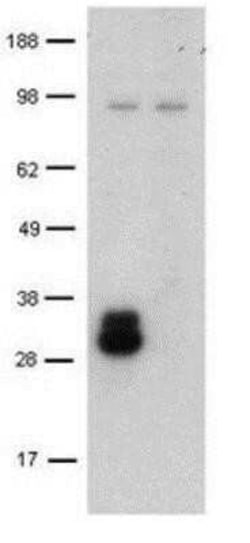
| Content And Storage | Store at 4C. Do not freeze. |
|---|---|
| Target Species | Mouse |
| Host Species | Rat |
| Conjugate | Unconjugated |
| Applications | Western Blot,Flow Cytometry,Immunoprecipitation |
| Isotype | IgG2a |
| Research Discipline | Adaptive Immunity, Immunology, Virology Bacteria and Parasites |
| Concentration | 0.5 mg/mL |
| Antigen | DC-SIGN/CD209 |
| Gene Symbols | CD209 |
| Regulatory Status | RUO |
| Purification Method | Affinity Purified |
| Dilution | Western Blot 1:100-1:2000, Flow Cytometry, Immunoprecipitation 1:10-1:500 |
| Gene Alias | CD209 antigendendritic cell-specific intracellular adhesion molecules (ICAM)-3 grabbingnon-integrin, CD209 molecule, CDSIGNHIV gpl20-binding protein, CLEC4LC-type lectin domain family 4 member L, DC-SIGN1C-type lectin domain family 4, member L, DC-SIGNMGC129965, Dendritic cell-specific ICAM-3-grabbing non-integrin 1 |
| Gene ID (Entrez) | 30835 |
| Formulation | Aqueous, may contain carrier protein/stabilizer. with 0.09% Sodium Azide |
| Immunogen | The immunogen for this antibody was CIRE. |
| Classification | Monoclonal |
| Primary or Secondary | Primary |
| Clone | LWC06 |
Mouse DC-SIGN/CD209 Antibody, R&D Systems™
Greener Choice Product
This product offers one or more environmental benefits itemized in the U.S. FTC Green Guides.
Learn More About the Greener Choice Program
This product offers one or more environmental benefits itemized in the U.S. FTC Green Guides.
Learn More About the Greener Choice Program
Mouse Monoclonal Antibody
| Content And Storage | Use a manual defrost freezer and avoid repeated freeze-thaw cycles. 12 months from date of receipt, -20 to -70 degreesC as supplied. 1 month, 2 to 8 degreesC under sterile conditions after reconstitution. 6 months, -20 to -70 degreesC under sterile conditions after reconstitution. |
|---|---|
| Target Species | Mouse |
| Host Species | Mouse |
| Conjugate | Unconjugated |
| Applications | CyTOF,Flow Cytometry |
| Form | Supernatant |
| Isotype | IgG2c |
| Gene Accession No. | FJ168685 |
| Antigen | DC-SIGN/CD209 |
| Purification Method | Protein A or G purified from cell culture supernatant |
| Dilution | Flow Cytometry 0.25μg/106 cells, CyTOF-ready |
| Gene Alias | CD209, CD209 antigendendritic cell-specific intracellular adhesion molecules (ICAM)-3 grabbingnon-integrin, CD209 molecule, CDSIGNHIV gpl20-binding protein, CLEC4L, CLEC4LC-type lectin domain family 4 member L, DCSIGN, DC-SIGN1, DC-SIGN1C-type lectin domain family 4, member L, DC-SIGNMGC129965, Dendritic cell-specific ICAM-3-grabbing non-integrin 1 |
| Gene ID (Entrez) | 30835 |
| Formulation | Lyophilized from a 0.2μm filtered solution in PBS with Trehalose. *Small pack size (SP) is supplied as a 0.2μm filtered solution in PBS. |
| Immunogen | Purified mouse DC-SIGN/CD209 extracellular domain Accession # FJ168685 |
| Classification | Monoclonal |
| Reconstitution | Reconstitute at 0.5mg/mL in sterile PBS. |
| Primary or Secondary | Primary |
| Test Specificity | Detects mouse DC-SIGN/CD209 in direct ELISAs. |
| Clone | MMD3R |
Human DC-SIGN/CD209 Antibody, R&D Systems™
Greener Choice Product
This product offers one or more environmental benefits itemized in the U.S. FTC Green Guides.
Learn More About the Greener Choice Program
This product offers one or more environmental benefits itemized in the U.S. FTC Green Guides.
Learn More About the Greener Choice Program
Mouse Monoclonal Antibody has been used in 38 publications
| Content And Storage | Use a manual defrost freezer and avoid repeated freeze-thaw cycles. 12 months from date of receipt, -20 to -70 degreesC as supplied. 1 month, 2 to 8 degreesC under sterile conditions after reconstitution. 6 months, -20 to -70 degreesC under sterile conditions after reconstitution. |
|---|---|
| Target Species | Human |
| Host Species | Mouse |
| Conjugate | Unconjugated |
| Applications | Western Blot,Flow Cytometry,Adhesion Blockade,CyTOF,Immunocytochemistry |
| Isotype | IgG2b |
| Antigen | DC-SIGN/CD209 |
| Gene Symbols | CD209 |
| Regulatory Status | RUO |
| Purification Method | Protein A or G purified from hybridoma culture supernatant |
| Dilution | Western Blot 1 ug/mL, Flow Cytometry 2.5 ug/10^6 cells, Adhesion Blockade 5.0 ug/mL, CyTOF-ready |
| Gene Alias | CD209, CD209 antigendendritic cell-specific intracellular adhesion molecules (ICAM)-3 grabbingnon-integrin, CD209 molecule, CDSIGNHIV gpl20-binding protein, CLEC4L, CLEC4LC-type lectin domain family 4 member L, DCSIGN, DC-SIGN1, DC-SIGN1C-type lectin domain family 4, member L, DC-SIGNMGC129965, Dendritic cell-specific ICAM-3-grabbing non-integrin 1 |
| Gene ID (Entrez) | 30835 |
| Formulation | Lyophilized from a 0.2 μm filtered solution in PBS with Trehalose. *Small pack size (SP) is supplied as a 0.2 μm filtered solution in PBS. with No Preservative |
| Immunogen | NIH-3T3 mouse embryonic fibroblast cell line transfected with human DC-SIGN/CD209 |
| Classification | Monoclonal |
| Reconstitution | Reconstitute at 0.5 mg/mL in sterile PBS. |
| Primary or Secondary | Primary |
| Test Specificity | Detects human DC-SIGN/CD209 on transfected NIH/3T3 cells and on monocyte derived dendritic cells. Does not react with parental mouse cells or irrelevant transfectants, such as human DC-SIGN2. |
| Clone | 120507 |