missing translation for 'onlineSavingsMsg'
Learn More
Learn More
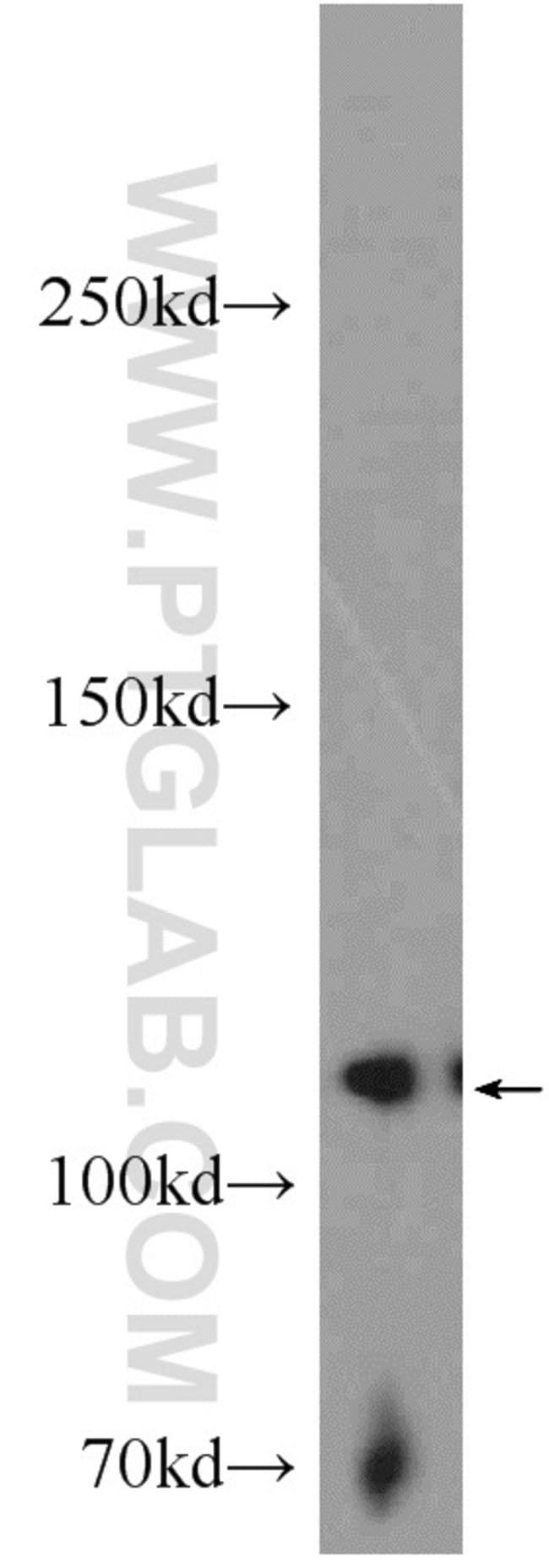


Description
Ephrin receptors and their ligands, the ephrins, mediate numerous developmental processes, particularly in the nervous system. Based on their structures and sequence relationships, ephrins are divided into the ephrin-A (EFNA) class, which are anchored to the membrane by a glycosylphosphatidylinositol linkage, and the ephrin-B (EFNB) class, which are transmembrane proteins. The Eph family of receptors are divided into 2 groups based on the similarity of their extracellular domain sequences and their affinities for binding ephrin-A and ephrin-B ligands. Ephrin receptors make up the largest subgroup of the receptor tyrosine kinase (RTK) family. The protein encoded by this gene binds to ephrin-B2 and plays an essential role in vascular development.
Specifications
Specifications
| Antigen | EPHB4 |
| Applications | Flow Cytometry, Western Blot, Immunohistochemistry (Paraffin) |
| Classification | Polyclonal |
| Concentration | 0.21 mg/mL |
| Conjugate | Unconjugated |
| Formulation | PBS with 50% glycerol and 0.02% sodium azide; pH 7.3 |
| Gene | EPHB4 |
| Gene Accession No. | P54760, P54761 |
| Gene Alias | EPH receptor B4, EPHB4, Ephrin type B receptor 4, HTK, MYK1, TYRO11, Tyrosine protein kinase TYRO11 |
| Gene Symbols | Ephb4 |
| Show More |
Product Title
By clicking Submit, you acknowledge that you may be contacted by Fisher Scientific in regards to the feedback you have provided in this form. We will not share your information for any other purposes. All contact information provided shall also be maintained in accordance with our Privacy Policy.
Spot an opportunity for improvement?