missing translation for 'onlineSavingsMsg'
Learn More
Learn More

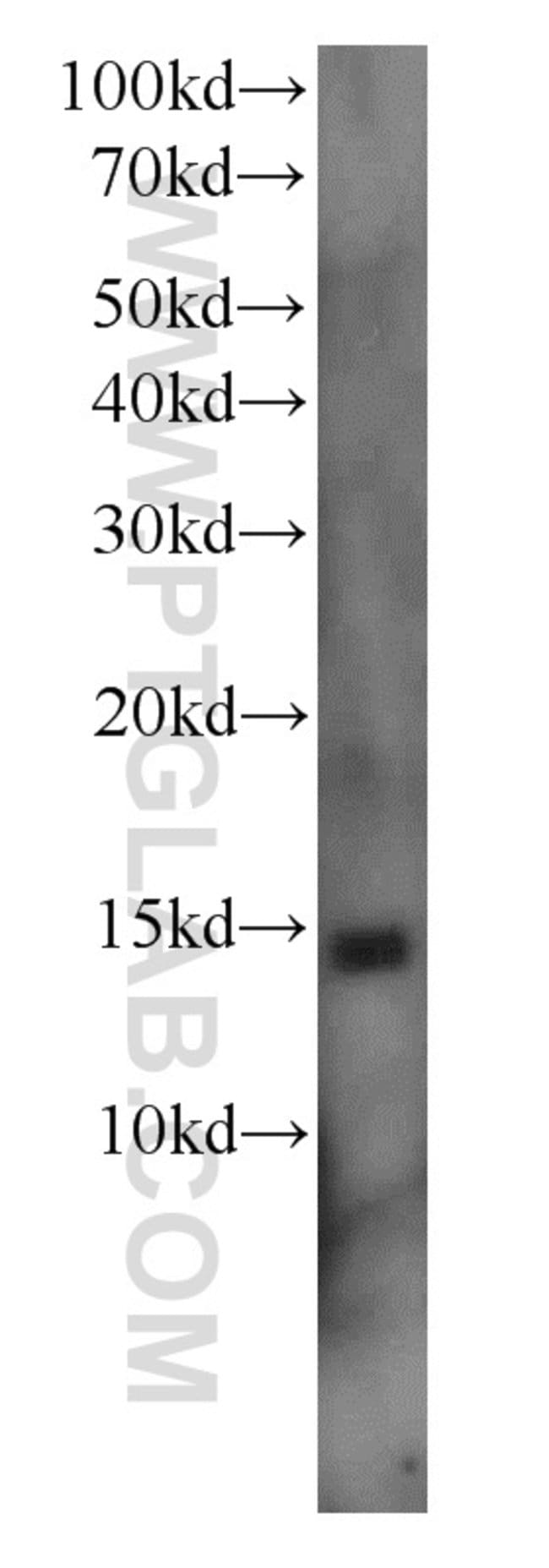


Description
The cytochrome c oxidase (COX) family of proteins function as the final electron donor in the respiratory chain to drive a proton gradient across the inner mitochondrial membrane, ultimately resulting in the production of water. The mammalian COX apoenzyme is a dimer, with each monomer consisting of 13 subunits, some of which are mitochondrial and some of which are nuclear. Found in the inner mitochondrial membrane, COX5 is the heme A-containing chain of the oxidase family that converts one molecule of oxygen and four molecules of hydrogen to two molecules of water. Two isoforms of COX5 exist, COX5a and COX5b. When oxygen levels within the cell are high, transcription of COX5a (the aerobic isoform) is up-regulated as the rate of cellular respiration increases. Conversely, when oxygen levels are low, COX5b (the hypoxic isoform) transcription increases and functions to maximize the turnover rate of the COX apoenzyme.
Specifications
Specifications
| Antigen | COX5B |
| Applications | Immunohistochemistry (Paraffin), Western Blot, Immunocytochemistry, Immunofluorescence |
| Classification | Polyclonal |
| Concentration | 0.3 mg/mL |
| Conjugate | Unconjugated |
| Formulation | PBS with 50% glycerol and 0.1% sodium azide; pH 7.3 |
| Gene | COX5B |
| Gene Accession No. | P10606, P12075, P19536 |
| Gene Alias | COX5B, COXVB |
| Gene Symbols | Cox5b |
| Show More |
Product Title
By clicking Submit, you acknowledge that you may be contacted by Fisher Scientific in regards to the feedback you have provided in this form. We will not share your information for any other purposes. All contact information provided shall also be maintained in accordance with our Privacy Policy.
Spot an opportunity for improvement?