Learn More
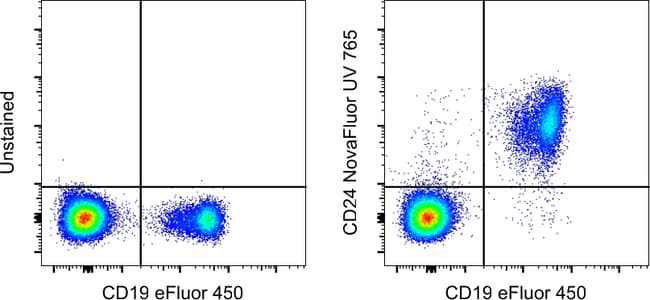
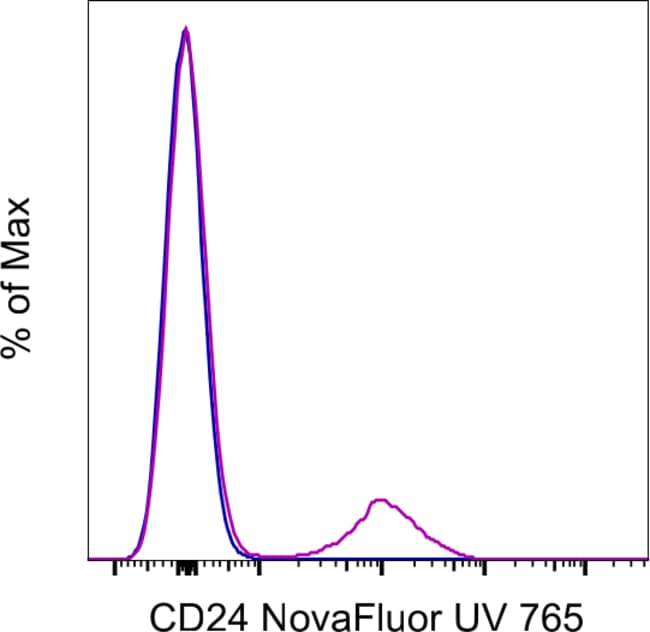
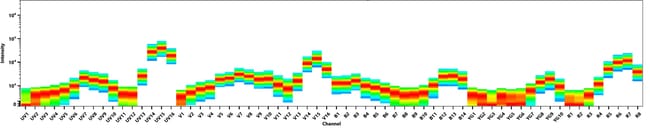
Invitrogen™ CD24 Monoclonal Antibody (eBioSN3 (SN3 A5-2H10)), NovaFluor™ UV 765, eBioscience™
Description
The SN3 monoclonal antibody reacts with the human CD24 molecule, also known as Heat Stable Antigen (HSA). This 35-50 kDa molecule is anchored in the plasma membrane via phosphatidylinositol and is expressed by erythrocytes, thymocytes, peripheral lymphocytes and myeloid lineage. It has been reported that P-selectin (CD62P) binds to CD24. This product contains 1 vial of NovaFluor conjugate and 1 vial of CellBlox Plus Blocking Buffer. Applications Tested This eBioSN3 (SN3 A5-2H10) antibody has been pre-titrated and tested by flow cytometric analysis of normal human peripheral blood cells. This can be used at 5 μL (0.6 μg) per test. A test is defined as the amount (μg) of antibody that will stain a cell sample in a final volume of 100 μL. Cell number should be determined empirically but can range from 10^5 to 10^8 cells/test. Master mixes Master mixes of NFs should be made at 2-8 °C and may be made up to 4 hours ahead of time. We do not recommend storing master mixes containing NovaFluor conjugates overnight or longer. Whole Blood compatibility When utilizing whole blood (as opposed to density-gradient-purified PBMC), we recommend lysing red blood cells in bulk prior to staining with NovaFluor conjugates. See the Bulk Lysis of Human Whole Blood protocol here. Staining of whole blood with NovaFluor conjugates followed by lysis of red blood cells may result in hig...

Specifications
Specifications
| Antigen | CD24 |
| Applications | Flow Cytometry |
| Classification | Monoclonal |
| Clone | eBioSN3 (SN3 A5-2H10) |
| Concentration | 0.6 μg/Test |
| Conjugate | NovaFluor UV 765 |
| Formulation | PBS with BSA and 0.09% sodium azide; pH 7.2 |
| Gene | Cd24 |
| Gene Accession No. | P25063 |
| Gene Alias | CD24; CD24 antigen; CD24 antigen (small cell lung carcinoma cluster 4 antigen); CD24 molecule; CD24A; CD24a antigen; cluster of differentiation 24; FLJ22950; FLJ43543; heat stable antigen; heat-stable antigen; HSA; Ly-52; Lymphocyte antigen 52; M1/69-J11D heat stable antigen; MGC75043; Nectadrin; nectadrin heat stable antigen; R13-Ag; Signal transducer CD24; Small cell lung carcinoma cluster 4 antigen; X62 heat stable antigen |
| Show More |
By clicking Submit, you acknowledge that you may be contacted by Fisher Scientific in regards to the feedback you have provided in this form. We will not share your information for any other purposes. All contact information provided shall also be maintained in accordance with our Privacy Policy.