Dissociation Reagents
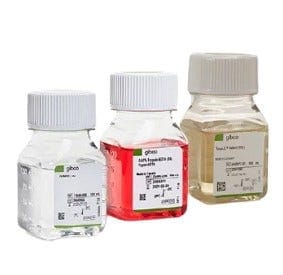
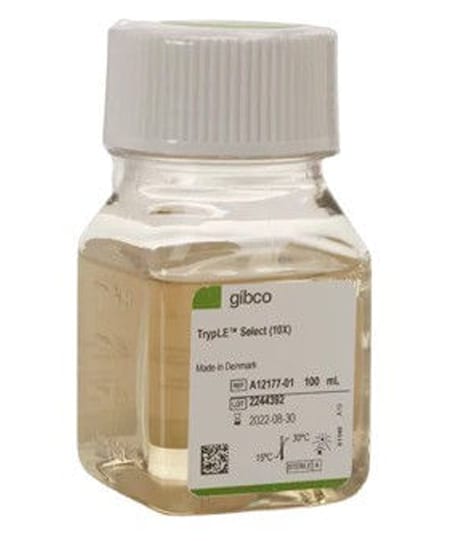
Dissociation reagents are used to dissociate cells from surface substrates and from other cells. Choose from dissociation reagents in different forms such as liquid, solid or frozen, for different cell types or with or without additives depending on your needs.

Useful Links
Save Now - Exclusive Deals

Product Code 7058026

Product Code 15323721

Product Code 15333651

Product Code 15313661
Must Have

Product Code 11420705

Product Code 15323609
Complete Your Order - Great Deals
FAQ
A dissociation reagent is a chemical substance used to break down or separate complex biological structures into their individual components. These reagents are commonly employed in various laboratory procedures to dissociate cells, tissues, or molecular complexes. Here are a few examples and their applications:
Cell Dissociation
- Trypsin: An enzyme used to dissociate adherent cells from culture surfaces and from each other by breaking down proteins
- Collagenase: An enzyme that breaks down collagen in tissues, used to isolate cells from tissue samples
Protein Complex Dissociation:
- Detergents (e.g., SDS, Triton X-100): Used to solubilize and dissociate protein complexes by disrupting hydrophobic interactions
- Urea or Guanidine Hydrochloride: Strong denaturants used to dissociate protein-protein interactions by disrupting hydrogen bonds and hydrophobic interactions
Nucleic Acid Dissociation:
- Formamide: Used to denature nucleic acids by disrupting hydrogen bonds between base pairs
- Alkaline Solutions (e.g., NaOH): Used to denature DNA by breaking hydrogen bonds
Trypsin and EDTA are commonly used together to dissociate adherent cells in cell culture. Here's how each works:
Trypsin is a proteolytic enzyme that breaks down proteins. It specifically cleaves peptide bonds at the carboxyl side of lysine and arginine amino acids. When applied to a cell culture, trypsin digests the proteins that mediate cell-cell and cell-matrix adhesion, effectively detaching cells from the culture vessel and from each other.
EDTA (Ethylenediaminetetraacetic Acid) is a chelating agent that binds divalent metal ions such as calcium and magnesium. These metal ions are essential for the function of cell adhesion molecules (CAMs) like integrins and cadherins. By chelating these ions, EDTA disrupts the CAMs, weakening cell-cell and cell-matrix interactions and enhancing the effectiveness of trypsin.
EDTA is often used in conjunction with trypsin in a trypsin-EDTA solution. EDTA first weakens the cell adhesion by chelating calcium and magnesium ions, and then trypsin further breaks down the adhesion proteins, facilitating efficient cell dissociation. Using trypsin and EDTA together ensures effective and gentle dissociation of adherent cells, minimizing damage and maintaining cell viability.
When selecting dissociation reagents for cell culture or tissue dissociation, consider the following:
- Different cell types and tissues have varying sensitivities and structural compositions. Choose reagents appropriate for the specific cell or tissue type you are working with.
- Ensure that the dissociation process preserves cell viability and functionality. Some reagents might be too harsh for certain cells, affecting their subsequent growth or behavior.
- Evaluate the effectiveness of the reagent in dissociating cells within a reasonable time frame. Inefficient dissociation can lead to prolonged exposure, potentially harming the cells.
- Consider how the dissociation reagent might affect subsequent experiments or applications. Some reagents may leave residues or alter cell surface markers, impacting downstream processes like flow cytometry, cell sorting, or molecular assays.
- Assess the safety and ease of handling the reagent. Some reagents may be toxic or require specific handling precautions. Ensure proper protocols are in place for safe use.
Resources and Related Information

Top Brands