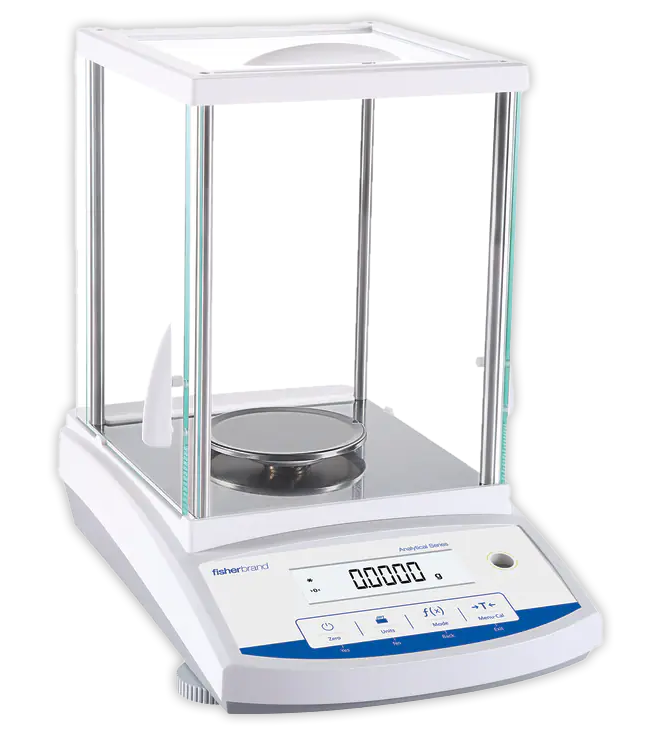
Analytical Balances
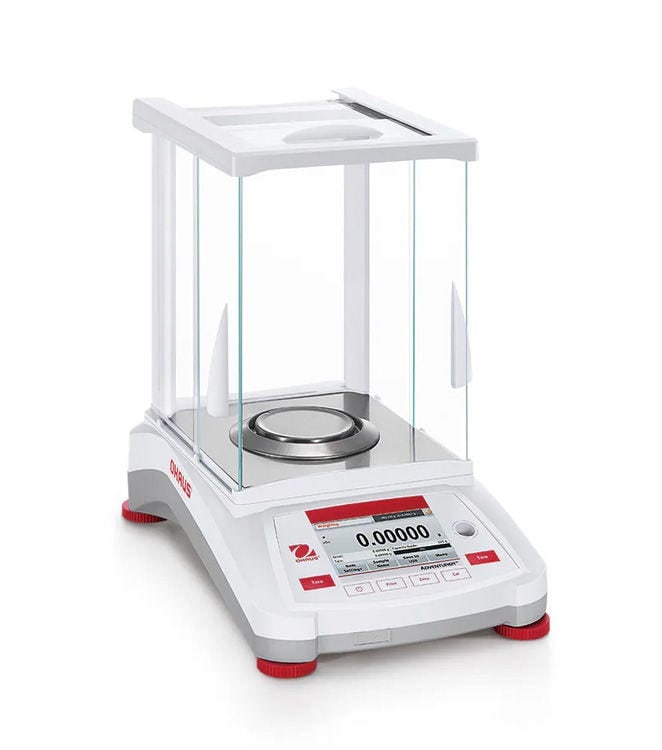
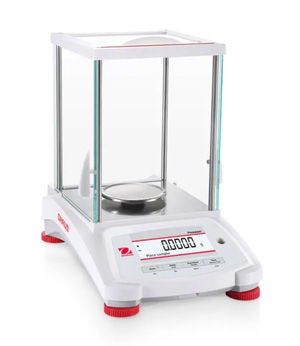
Analytical balances are highly accurate and precise, and are designed to meet all your weighing needs within a chemical, industrial or pharmaceutical laboratory. They come with either an internal or external calibration system, with integrated software, and are offered with a wide range of weighing capacities.

Useful Links
Selector Guide
Get the best-fit analytical balance for your lab protocols with our interactive selection guide.
Save Now - Exclusive Deals

Product Code 15907500

Product Code 16354688

Product Code 15519420

Product Code 15355043

Product Code 15446101

Product Code 16611122

Product Code 16814611
Product Code 16874601
Complete Your Order - Great Deals



Must Have
Product Code 15917500

Product Code 16384698
Product Code 16314748

Product Code 15958606

Product Code 15947500
Product Code 15335043
Product Code 15987490

Product Code 16243252
FAQ
An analytical balance is a high-precision weighing instrument designed to measure very small mass changes, typically with 0.01 mg to 0.1 mg readability. It is enclosed in a draft shield to eliminate interference from air currents, static electricity, and temperature variations.
Compared to precision balances (1 mg to 1 g readability), analytical balances provide superior sensitivity, repeatability, and stability, making them essential for quantitative chemical analysis, formulation, and trace-level weighing.
Internal calibration employs a built-in reference mass to automatically adjust the balance’s calibration constant, compensating for environmental changes such as temperature fluctuations or mechanical drift.
Advanced models perform fully automatic calibration (ISO CAL) based on time or temperature thresholds, ensuring continuous accuracy without operator input.
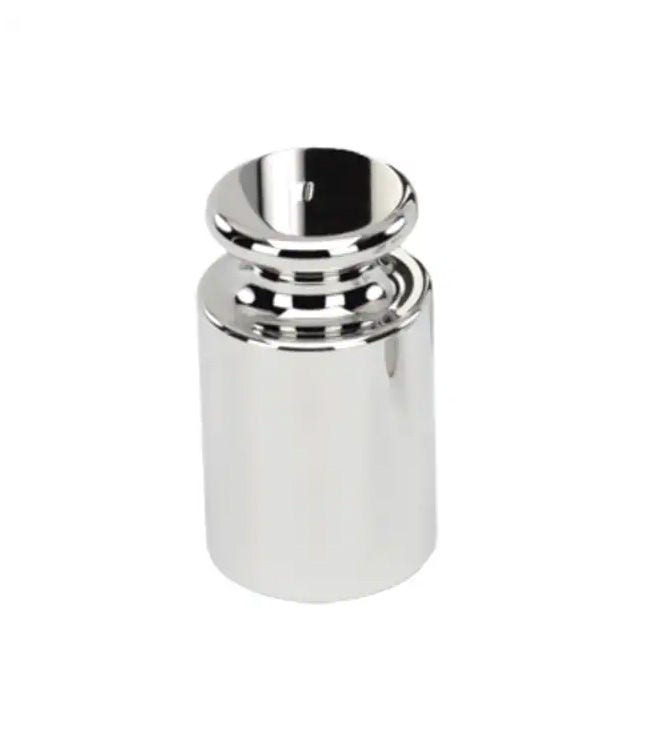
Internal calibration supports GLP/GMP compliance, reduces downtime, and provides documented traceability. For regulated workflows, periodic verification with certified external weights (E2 or F1 class) remains essential for maintaining long-term precision.
Analytical balances are highly sensitive to external influences. For optimal performance:
- Place the instrument on an anti-vibration table away from air vents and doors.
- Maintain temperature stability within ±2 °C and humidity between 45–60%.
- Neutralize static charge using ionizers or grounded containers, especially for powders and plastics.
- Allow samples to thermally equilibrate before weighing.
Uncontrolled environmental factors can cause reading drift, unstable measurements, or compromised repeatability—issues critical in advanced analytical and QC laboratories.
Top Brands